Holding (2025)
Fayen d’Evie
Deep Time Real Time, RMIT Design Hub Gallery, Naarm/Melbourne, 3 May 2025
-
In 2022, while preparing for a talk presented as part of Kings ARI’s ‘Other Body Knowledge’ programme on art and ableism, Fayen d’Evie unearthed a 1930 speech by William Jones, Inspector General for the Insane in Victoria, promoting eugenics. He described seeing the spoil heap in the yard of a master potter: plates, cups, and saucers, “ill-shapen, cracked or crazed... so that for the sake of the reputation of the potter, these articles were rejected for the market... The rejected pots are in life represented by the insane, the mentally defective, the criminal, the inefficient, as well as the physically debilitated person.” After moving in 2024 to the former Kew Asylum for Lunatics, d’Evie recalled this quote, and began to feel her way again through the language of the Victorian eugenicists, their ‘progressive’ politics, and the early history of asylums in Victoria.
The same week that she moved into the asylum, Fayen was invited by curators Amelia Wallin and Jacina Leong to contribute to the La Trobe Art Institute exhibition ‘Healing.’
“I received the email inviting me into this exhibition as I was unpacking boxes, having moved two days earlier into the old Kew Asylum for Lunatics. The asylum had been built in the 1870s as a retreat on the hill to heal those who needed healing. But like most benevolent ideas of the times, its ethics of care were soon swallowed by power, brutality, eugenics and disciplinary measures. I was worried the asylum would feel haunted. But once I stepped through the gate, through landscaped gardens, a bowling greens, tennis courts, a swimming pool, even a secret garden, I felt calm radiating through me. Sometimes I wonder whether stories of hauntings signal that a community had developed a surface awareness of complicity in violence, but still clings to a resistance to meeting that violence with vulnerability and honest reckoning. The day before I moved, my dog Lulu died, suddenly and unexpectedly, and I was grief stricken. I decided to learn to make tapestry, a form of self-therapy, as I struggled to cope with the mental and physical exhaustion of intertwined canine and familial dying. With awkward knots and sincere amateurism, I sat in my bedroom, weaving the textures of the asylum gardens. In parallel, I began to unravel concealed stories of the people who had lived here: my own private version of meeting the history of this place with vulnerability and honest reckoning.”
Through this private weaving and contemplation process, Fayen began to reimagine the asylum as a place where people who refuse normalcy can individually and collectively hallucinate, perform, and construct temporary communities within which to live, dream, luxuriate in rest, and co-create. She invited a temporary, disability-led collective of artists, writers, performers, designers and architects from so-called Australia, the US and the UK to gather in a hybrid online and in-person exchange to respond to this proposition.
On 8 November, within a provisional architecture featuring a new textile work by Chelsea Clarke (Houston), and paintings by Luke D King, Fayen and Jon Tjhia presented a citational performance lecture at Kings, enfolding inter-sensorial contributions from some of the LoL collective: Joseph Rizzo Naudi, Poppy Levinson, Zena Cumpston, Adam Deusien, Nelly Kate, Justin Looper, Hen Vaughan, Ebony Wightman, Jenny Hector, Jordan Valageorgiou and Liam Benson. Afterwards Nelly Kate led a public workshop, experimenting with methods for roving captions; then closed out the afternoon with a sound performance with prepared tape recordings from in and around Kew Asylum.
The event was presented in collaboration with La Trobe Art Institute. It arose from a creative exchange hosted by Access Lab and Library, MIT Spatial Sound Lab and We Are Studios, supported by an Arts House Warehouse Residency and Creative Australia.
-
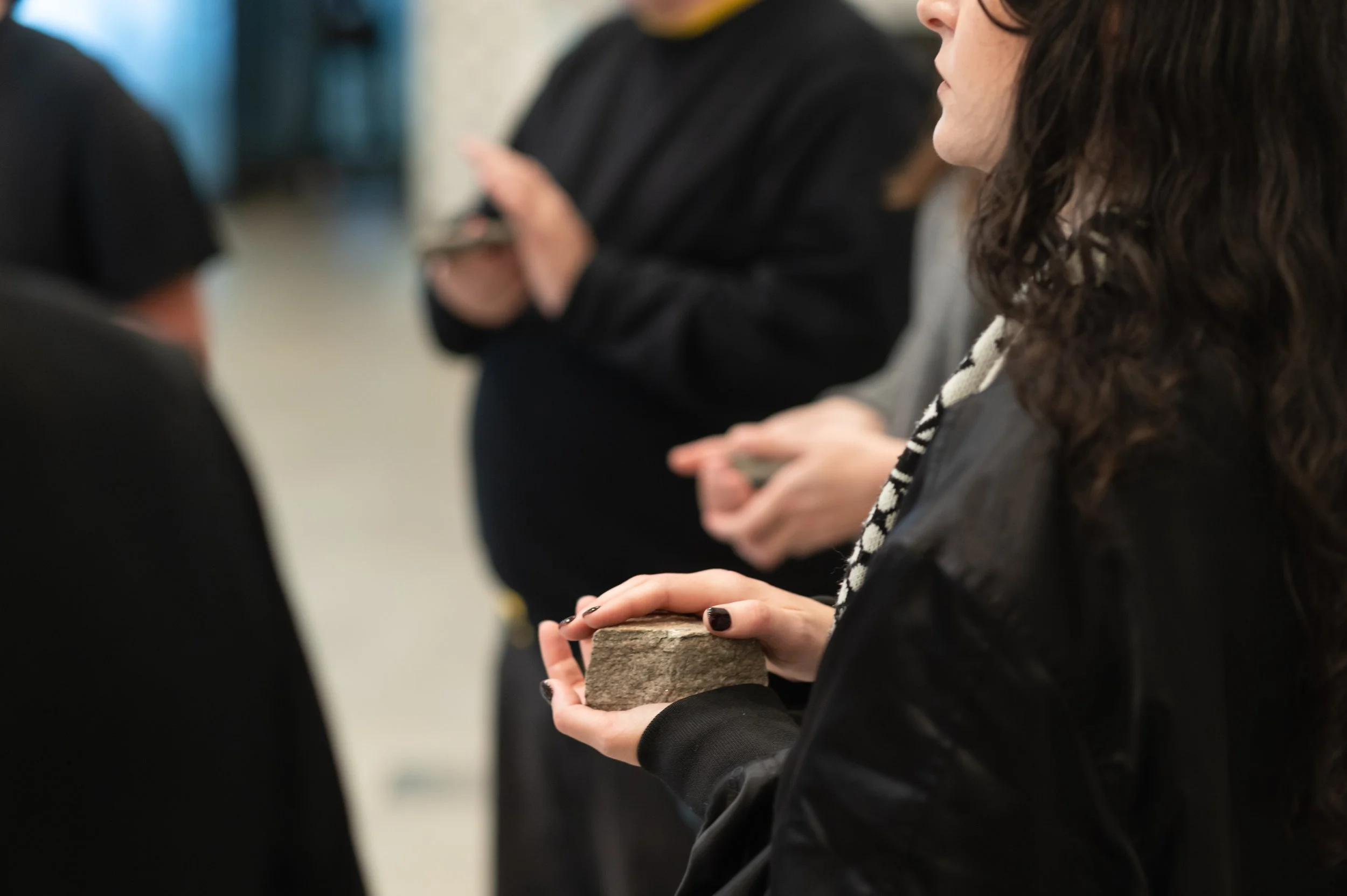
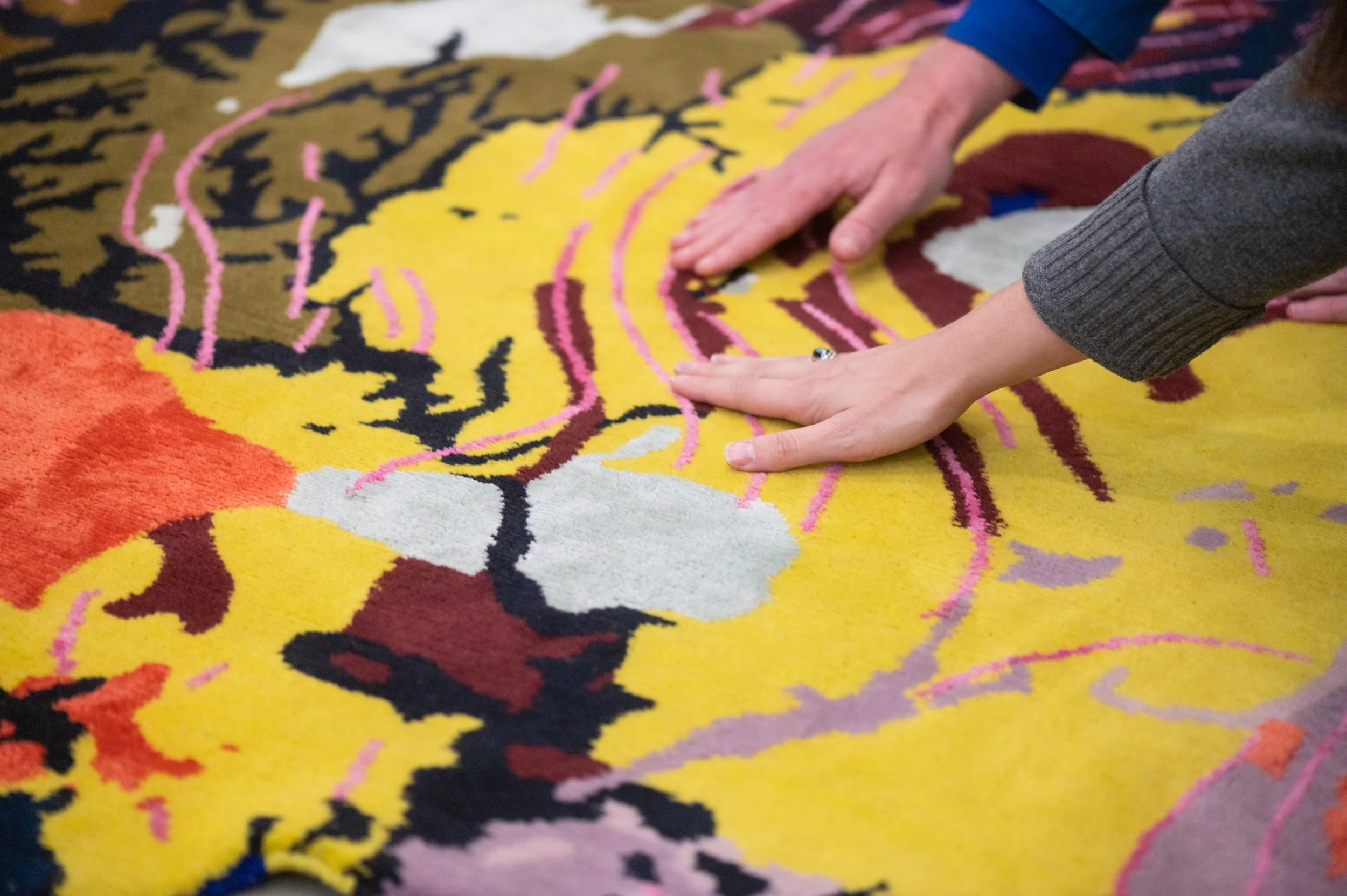
Performative tour
-
Deep Time Real Time, RMIT Design Hub Gallery, Naarm/Melbourne, 3 May 2025
The 2025 Alastair Swayn Legacy Exhibition : Deep Time Real Time explored design’s relationship to planetary systems through two opposing time scales – ‘deep time’ and ‘real-time’.
The exhibition Deep Time Real Time explored, how we as global citizens, continue to struggle with reconciling geological timescales with our everyday lives that, in turn, affects our collective ability to make decisions on regenerative actions for the future. However, in utilising new technologies, we can gather, analyse and visualise data – some in real time – to better understand environmental conditions that would, otherwise, be invisible.
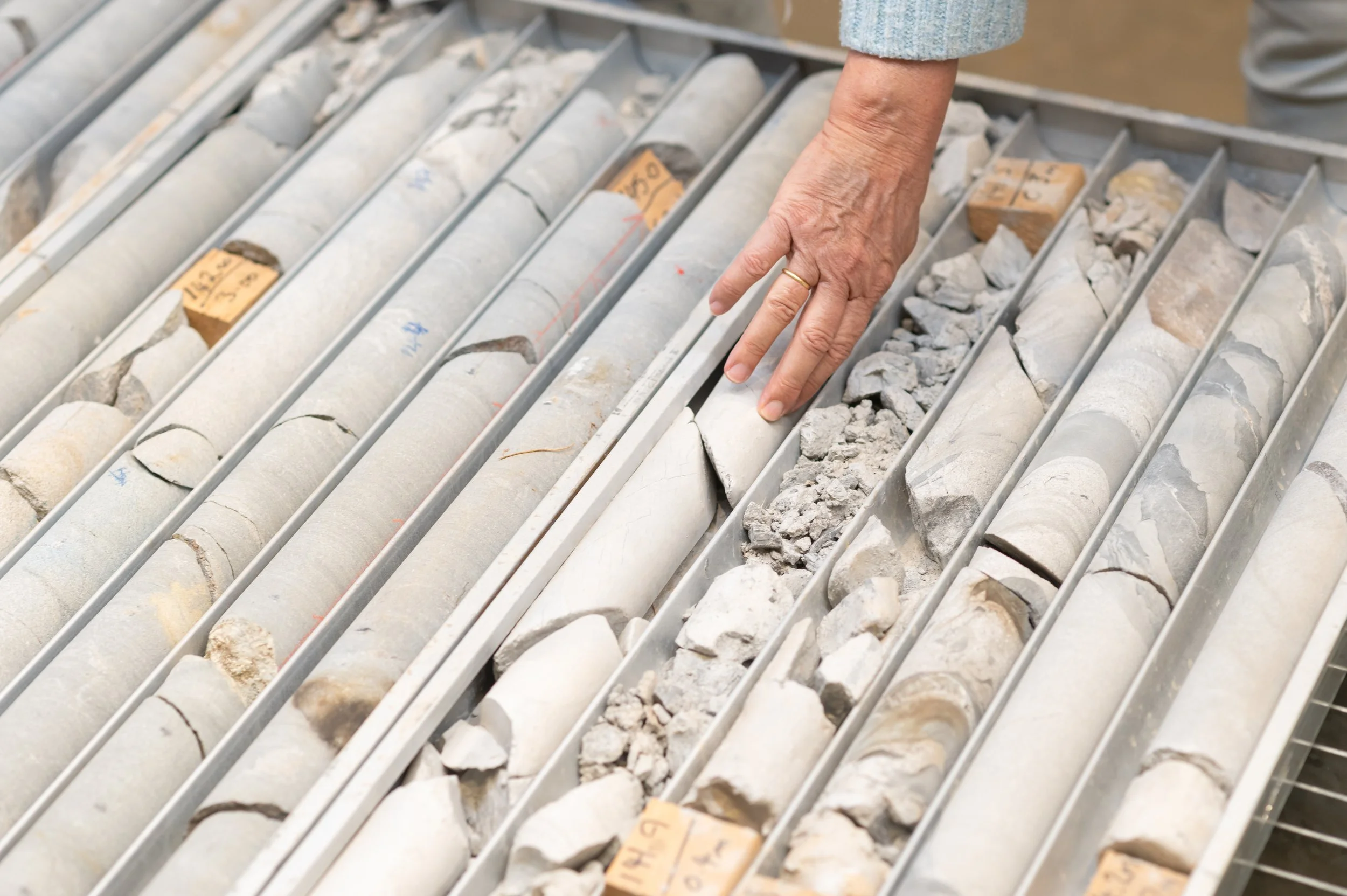
Responding to the expansive spaces of Design Hub Gallery, the exhibition featured a large-scale installation – designed by architects Simulaa – containing geological and material samples with research works to visualise our relationship to time through material artefacts.
Presented alongside the interactive structure were a series of creative and research-driven works from renowned designers, academics and artists.
Their contributions engaged with themes of ecology, energy and technology, offering critical perspectives on time-based thinking and the urgent need for new collective societal responses to environmental challenges.
Deep Time Real Time featured creative works and research from Fayen d’Evie, Stuart Geddes and Žiga Testen, Alicia Frankovich, Emma Jackson, Farzin Lotfi-Jam, Nicholas Mangan and Cameron Allan McKean, Joel Sherwood Spring and Simulaa.
-
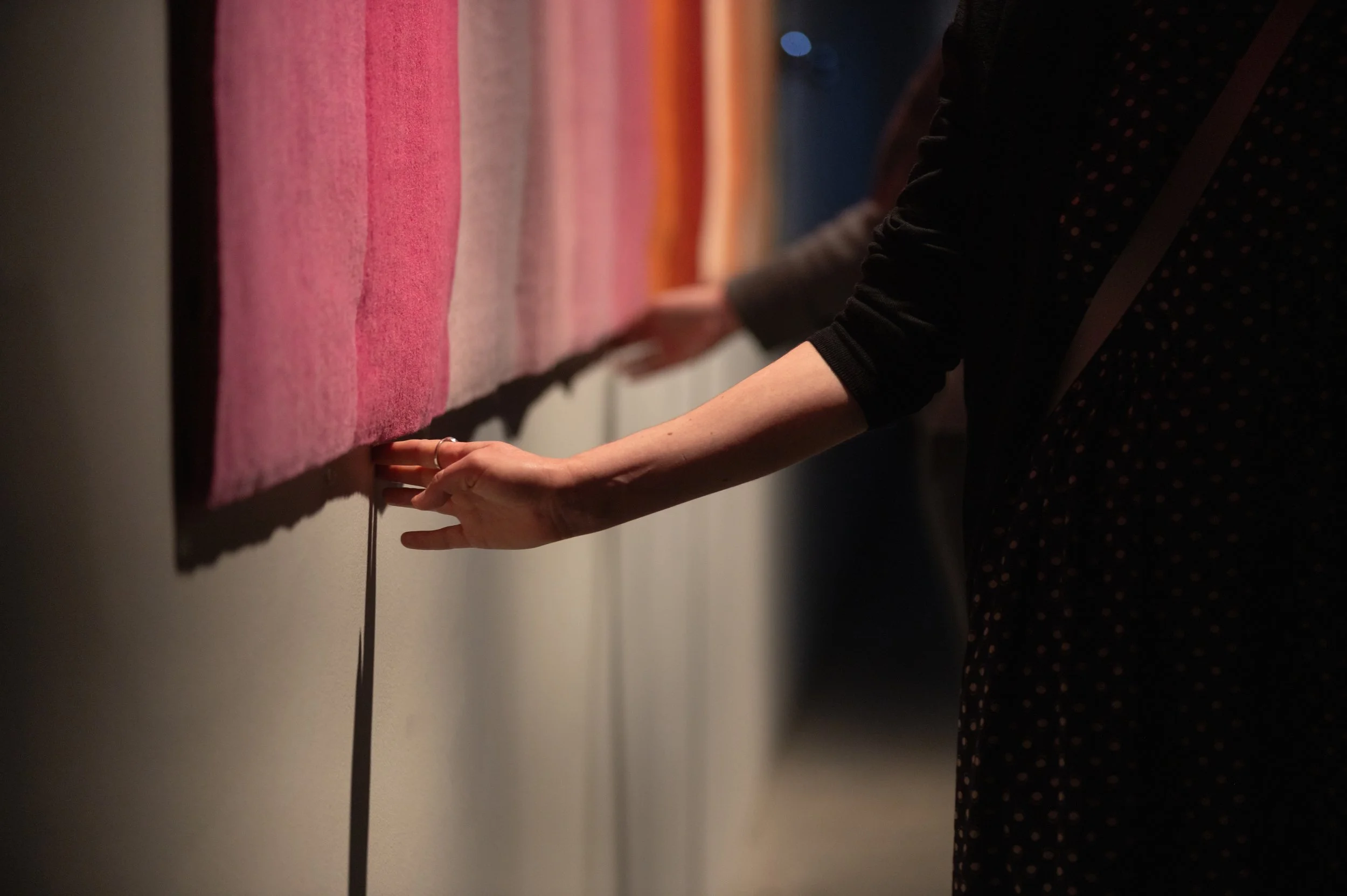
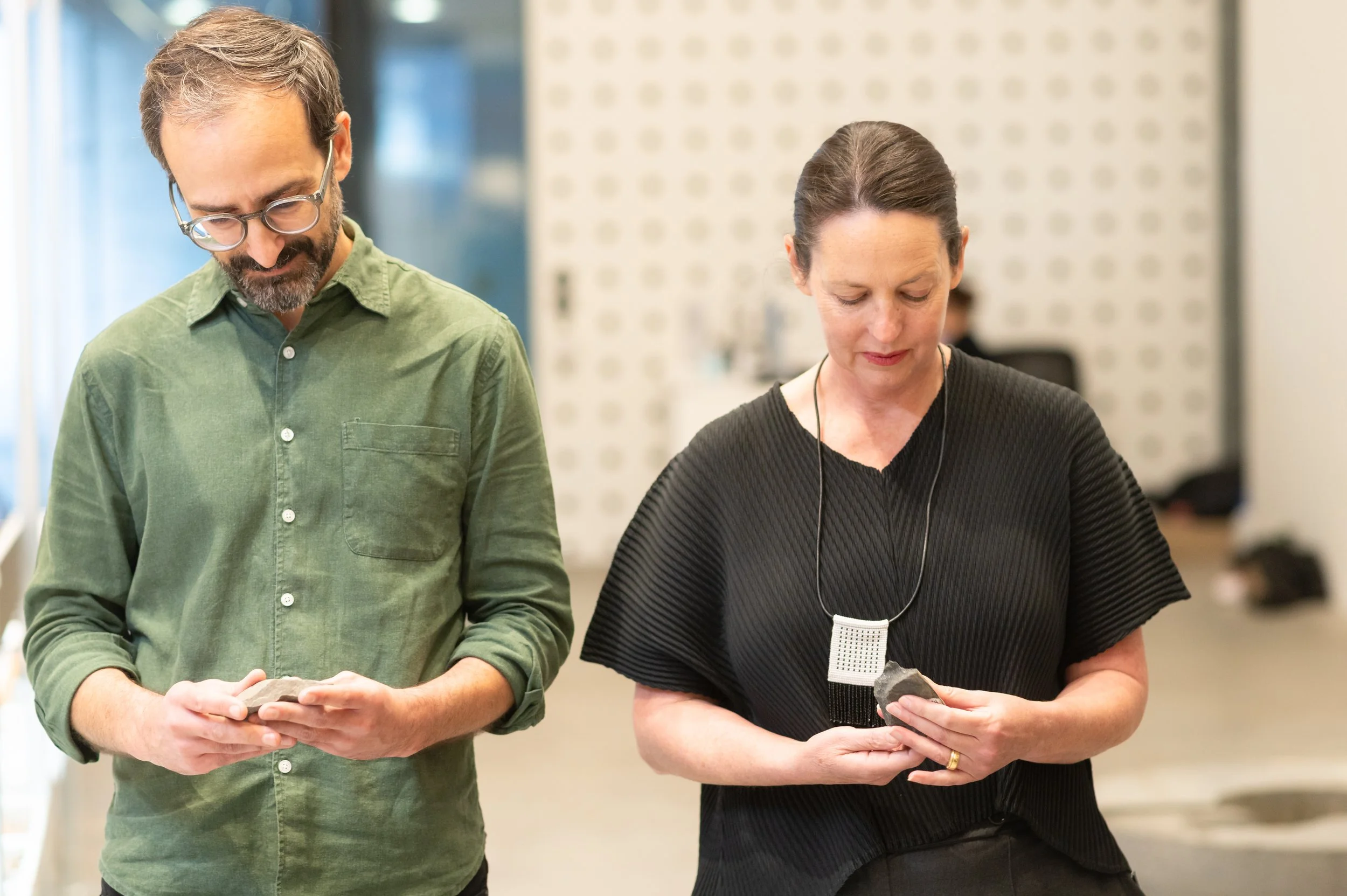
Fayen d’Evie, Holding, 2025 (documentation of performance on 3 May 2025), for Deep Time Real Time, RMIT Design Hub Gallery, Carlton, 2025. Photo by Keelan O’Hehir.