Ill-formed. Cracked. Crazed. (working title) (2025)
Fayen d’Evie
Healing: Art and Institutional Care, Latrobe Art Institute, Bendigo, AU, 20 Aug - 9 Nov 2025
-
In 2022, while preparing for a talk presented as part of Kings ARI’s ‘Other Body Knowledge’ programme on art and ableism, Fayen d’Evie unearthed a 1930 speech by William Jones, Inspector General for the Insane in Victoria, promoting eugenics. He described seeing the spoil heap in the yard of a master potter: plates, cups, and saucers, “ill-shapen, cracked or crazed... so that for the sake of the reputation of the potter, these articles were rejected for the market... The rejected pots are in life represented by the insane, the mentally defective, the criminal, the inefficient, as well as the physically debilitated person.” After moving in 2024 to the former Kew Asylum for Lunatics, d’Evie recalled this quote, and began to feel her way again through the language of the Victorian eugenicists, their ‘progressive’ politics, and the early history of asylums in Victoria.
The same week that she moved into the asylum, Fayen was invited by curators Amelia Wallin and Jacina Leong to contribute to the La Trobe Art Institute exhibition ‘Healing.’
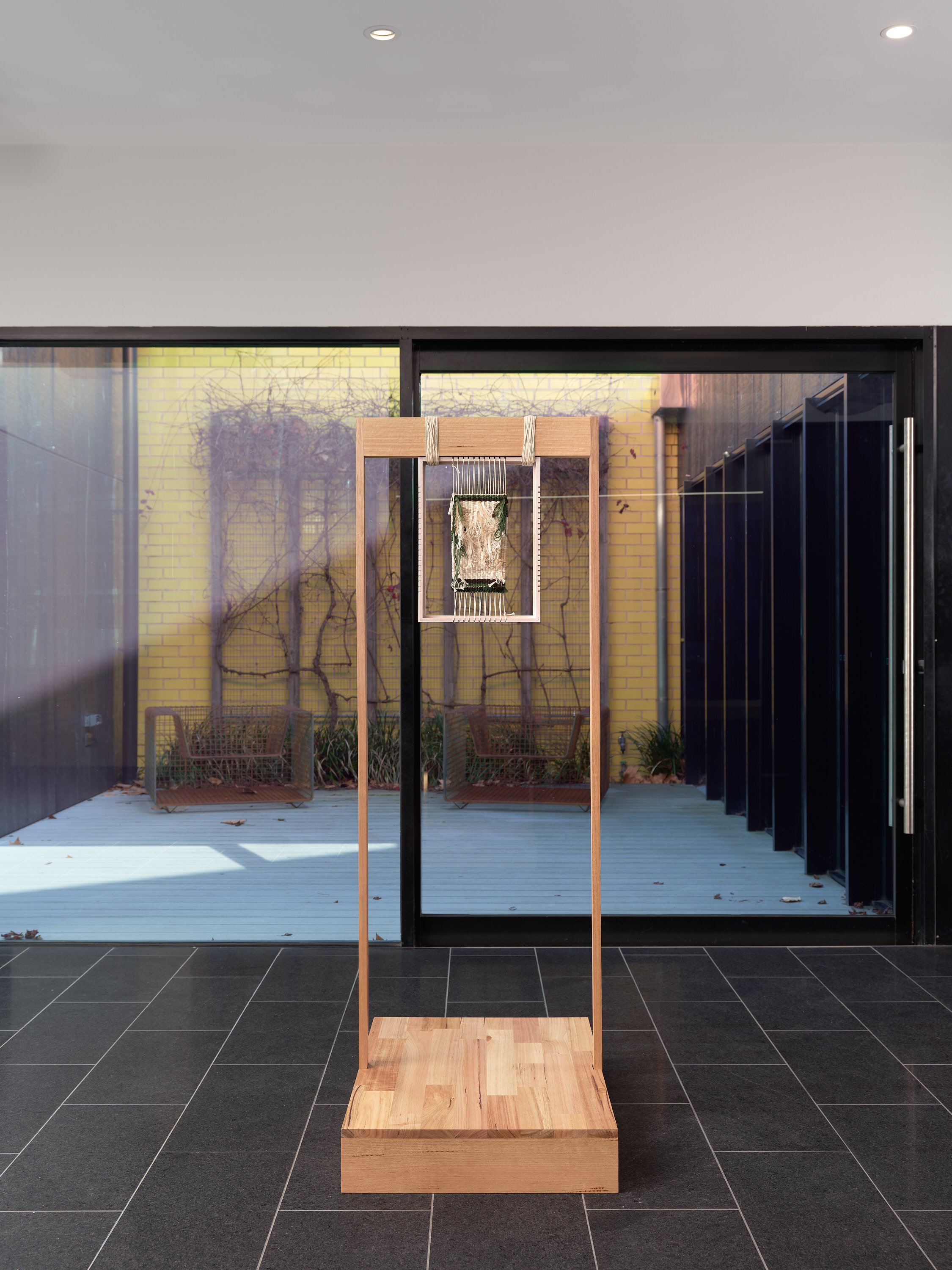
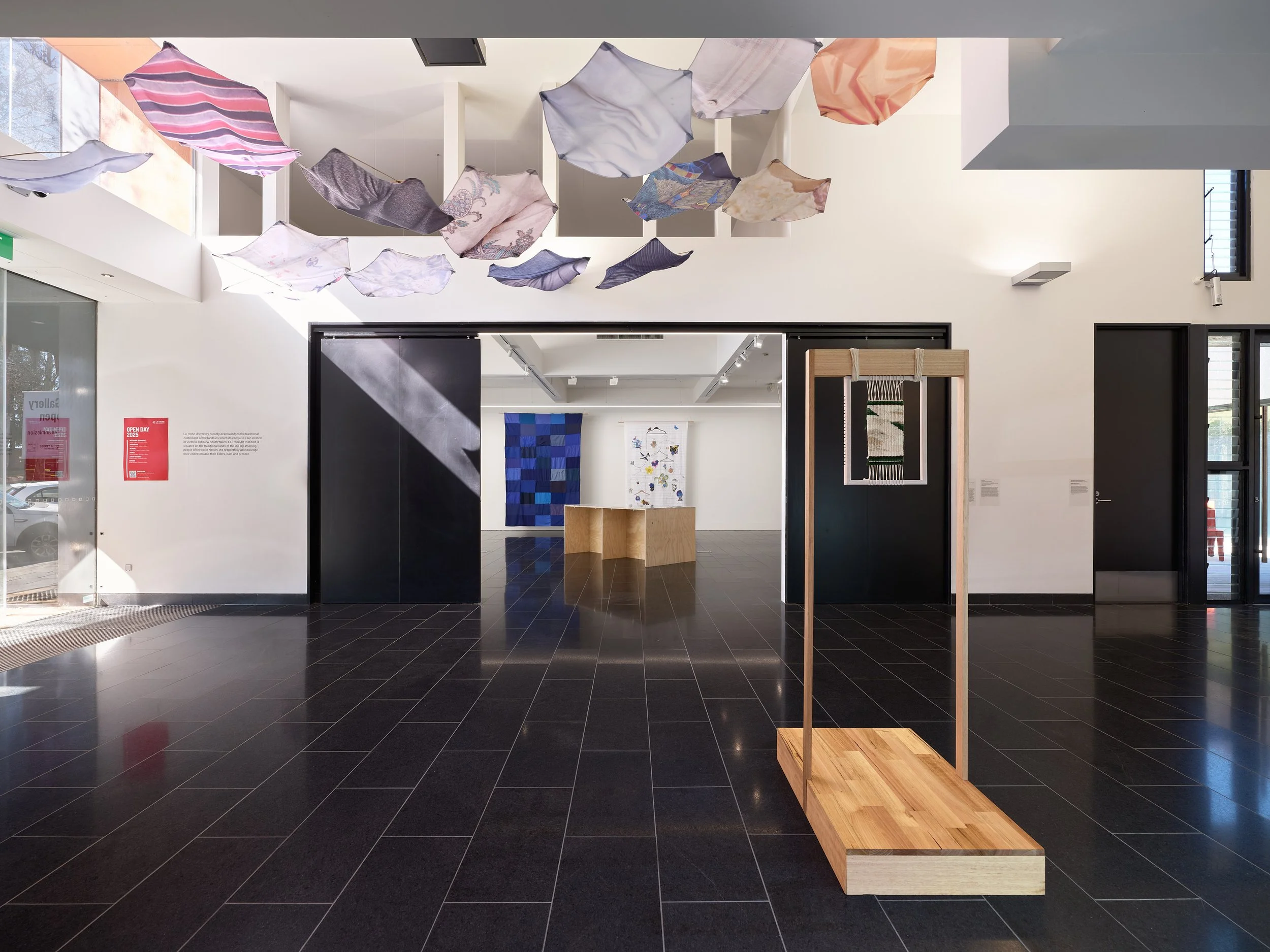
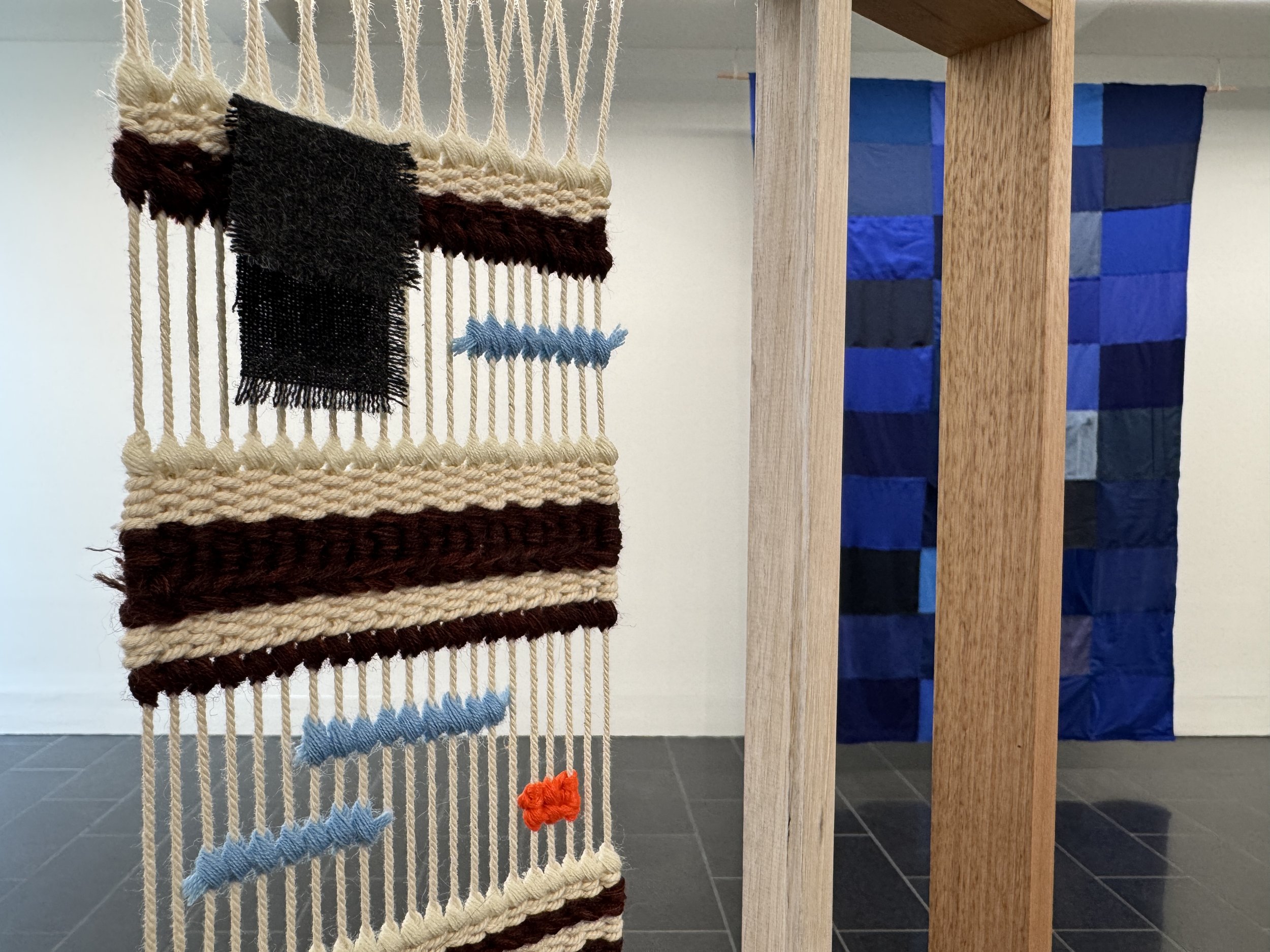
“I received the email inviting me into this exhibition as I was unpacking boxes, having moved two days earlier into the old Kew Asylum for Lunatics. The asylum had been built in the 1870s as a retreat on the hill to heal those who needed healing. But like most benevolent ideas of the times, its ethics of care were soon swallowed by power, brutality, eugenics and disciplinary measures. I was worried the asylum would feel haunted. But once I stepped through the gate, through landscaped gardens, a bowling greens, tennis courts, a swimming pool, even a secret garden, I felt calm radiating through me. Sometimes I wonder whether stories of hauntings signal that a community had developed a surface awareness of complicity in violence, but still clings to a resistance to meeting that violence with vulnerability and honest reckoning. The day before I moved, my dog Lulu died, suddenly and unexpectedly, and I was grief stricken. I decided to learn to make tapestry, a form of self-therapy, as I struggled to cope with the mental and physical exhaustion of intertwined canine and familial dying. With awkward knots and sincere amateurism, I sat in my bedroom, weaving the textures of the asylum gardens. In parallel, I began to unravel concealed stories of the people who had lived here: my own private version of meeting the history of this place with vulnerability and honest reckoning.”
Through this private weaving and contemplation process, Fayen began to reimagine the asylum as a place where people who refuse normalcy can individually and collectively hallucinate, perform, and construct temporary communities within which to live, dream, luxuriate in rest, and co-create. She invited a temporary, disability-led collective of artists, writers, performers, designers and architects from so-called Australia, the US and the UK to gather in a hybrid online and in-person exchange to respond to this proposition.
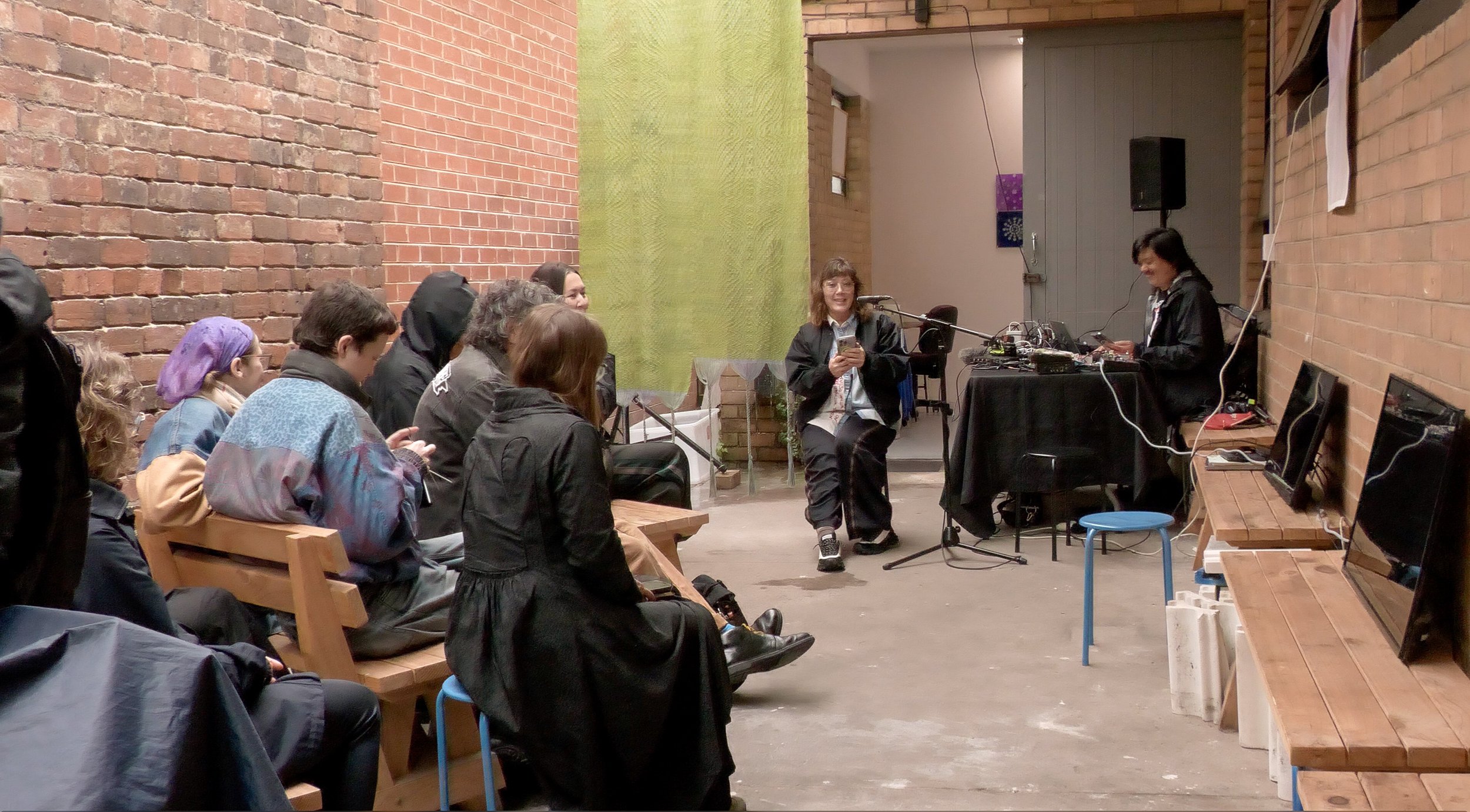
On 8 November, within a provisional architecture featuring a new textile work by Chelsea Clarke (Houston), and paintings by Luke D King, Fayen and Jon Tjhia presented a citational performance lecture at Kings, enfolding inter-sensorial contributions from some of the LoL collective: Joseph Rizzo Naudi, Poppy Levinson, Zena Cumpston, Adam Deusien, Nelly Kate, Justin Looper, Hen Vaughan, Ebony Wightman, Jenny Hector, Jordan Valageorgiou and Liam Benson. Afterwards Nelly Kate led a public workshop, experimenting with methods for roving captions; then closed out the afternoon with a sound performance with prepared tape recordings from in and around Kew Asylum.
The event was presented in collaboration with La Trobe Art Institute. It arose from a creative exchange hosted by Access Lab and Library, MIT Spatial Sound Lab and We Are Studios, supported by an Arts House Warehouse Residency and Creative Australia.
-
Installation of tapestries
Catalysing a disability-led collective, and co-development of a stage play (private)
Performance lecture -
Healing: Art and Institutional Care, Latrobe Art Institute, Bendigo, AU, 20 Aug - 9 Nov 2025
Artists: Fayen d’Evie, Carol Dobson, Jenny Hickinbotham, Helen Johnson, Alecia Neo, Sue Robertson, Finnegan Shannon and Lukaza Branfman-Verissimo, and Grace Wood
Curated by Amelia Wallin and Jacina Leong
Healing: Art and Institutional Care was a group exhibition of contemporary and historic artworks that took as its starting point the contested space of institutional care.
The exhibition drew from the Larundel Collection, and the unique Art Access Studio program led by artists at the former Larundel Mental Hospital (1953-1991), on what is now the grounds of La Trobe University (Bundoora Campus). Art Access Studio pioneered and challenged the ways in which art could be used therapeutically in psychiatric hospitals, shifting away from the artwork as a diagnostic tool, towards artmaking as an opportunity for self-directed healing.
Alongside select works from the Larundel Collection, exhibited with the permission of the makers, the exhibition included newly commissioned and existing works by contemporary artists engaging critically with the ethics and limitations of institutional care. This includes works by artists whose practices draw from their lived experiences (of mental ill health, disability justice, neurodivergence and caregiving) to challenge the neutrality of institutional care and redraw its boundaries. In doing so, this exhibition traced how artists create relational possibilities for healing within institutions, in spite of them, and entirely outside them—through both historical precedents and contemporary practices that challenge, refuse and/or reimagine institutional forms of care.
-
Installation images by Christo Crocker
Detail snapshots by Fayen d’Evie