( reflecting air ) “…Touch enabled her to discern minute details…
which often pass unnoticed…” (2025)
Fayen d’Evie
Permanent commission, Newcastle Art Gallery, Newcastle
-
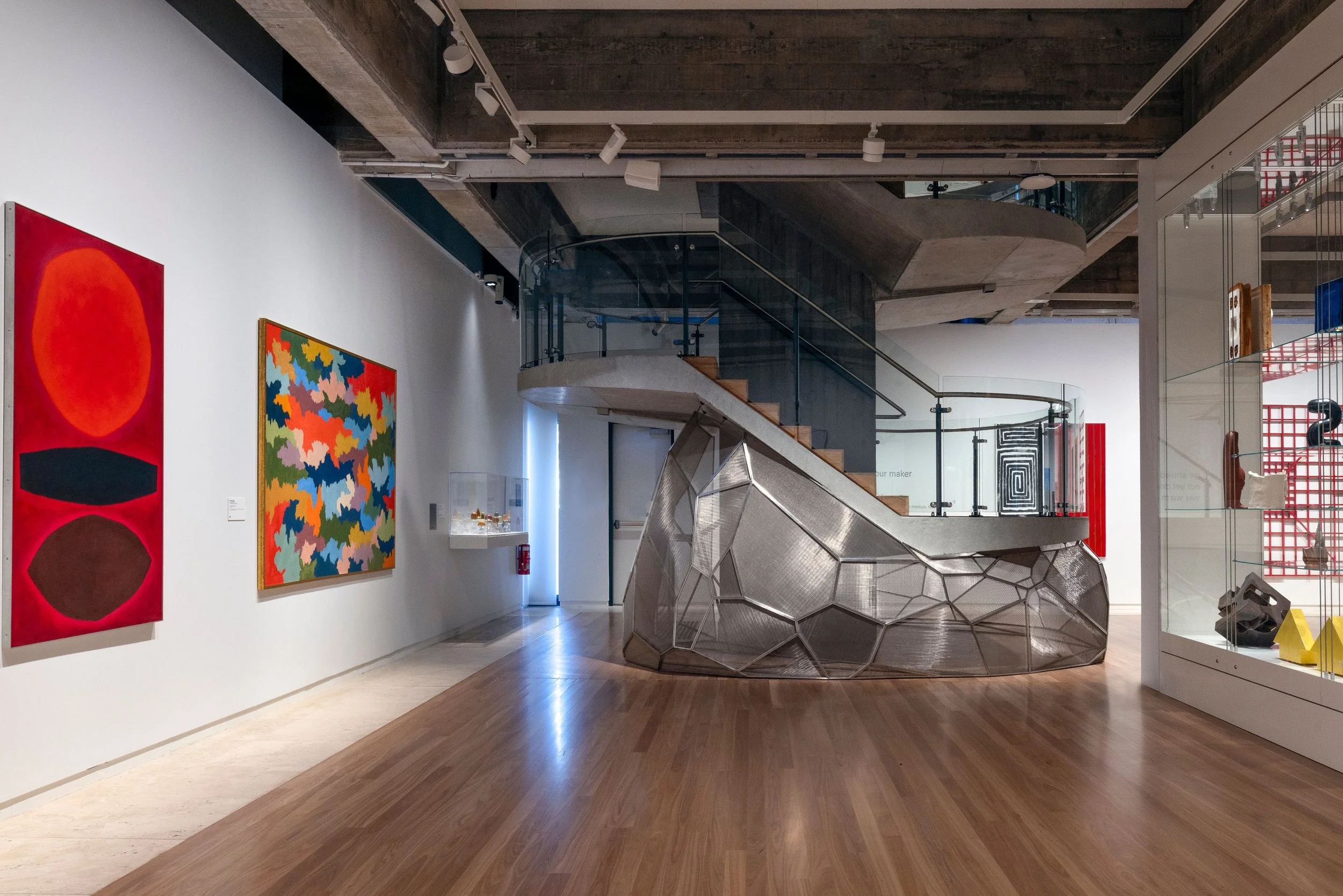
( reflecting air ) “…Touch enabled her to discern minute details… which often pass unnoticed…” 2025 was commissioned to enhance the accessibility of the Newcastle Art Gallery’s architectural expansion. The scale of the expansion led to the Gallery’s 1977 heritage brutalist staircases becoming subject to modern building code standards. Their free floating concrete platforms were assessed as a hazard for blind visitors. Fayen d’Evie was commissioned to provide a sculptural solution.
The pair of sculptures designed by Fayen d’Evie embed blindness conceptually and structurally in the heart of the Gallery. The sculptures honour a little known friendship between eighteenth century philosopher and art critic Denis Diderot and blind woman Melanie de Salignac. Diderot has credited their conversations as significantly shaping his ideas about perception and description. This includes his writing on artworks from the Paris Salons, considered one of the foundations of modern art criticism.
“I wanted these sculptures to be invitations not barriers, and architectural prompts for conversation between visitors, sighted and blind alike. They honour the original staircase structure, while creating a tactile veil around it.”
- Fayen d’Evie, 2025
-
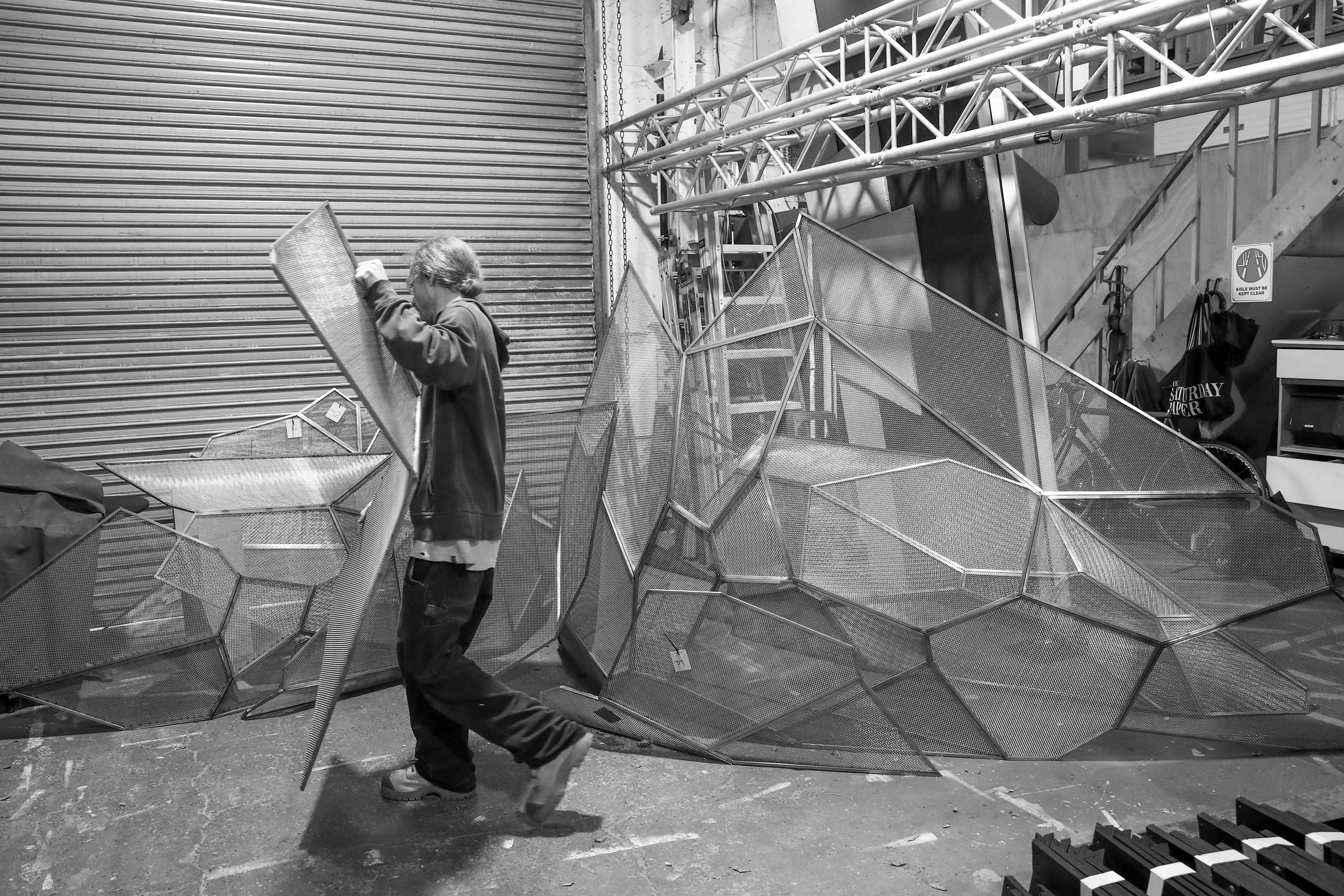
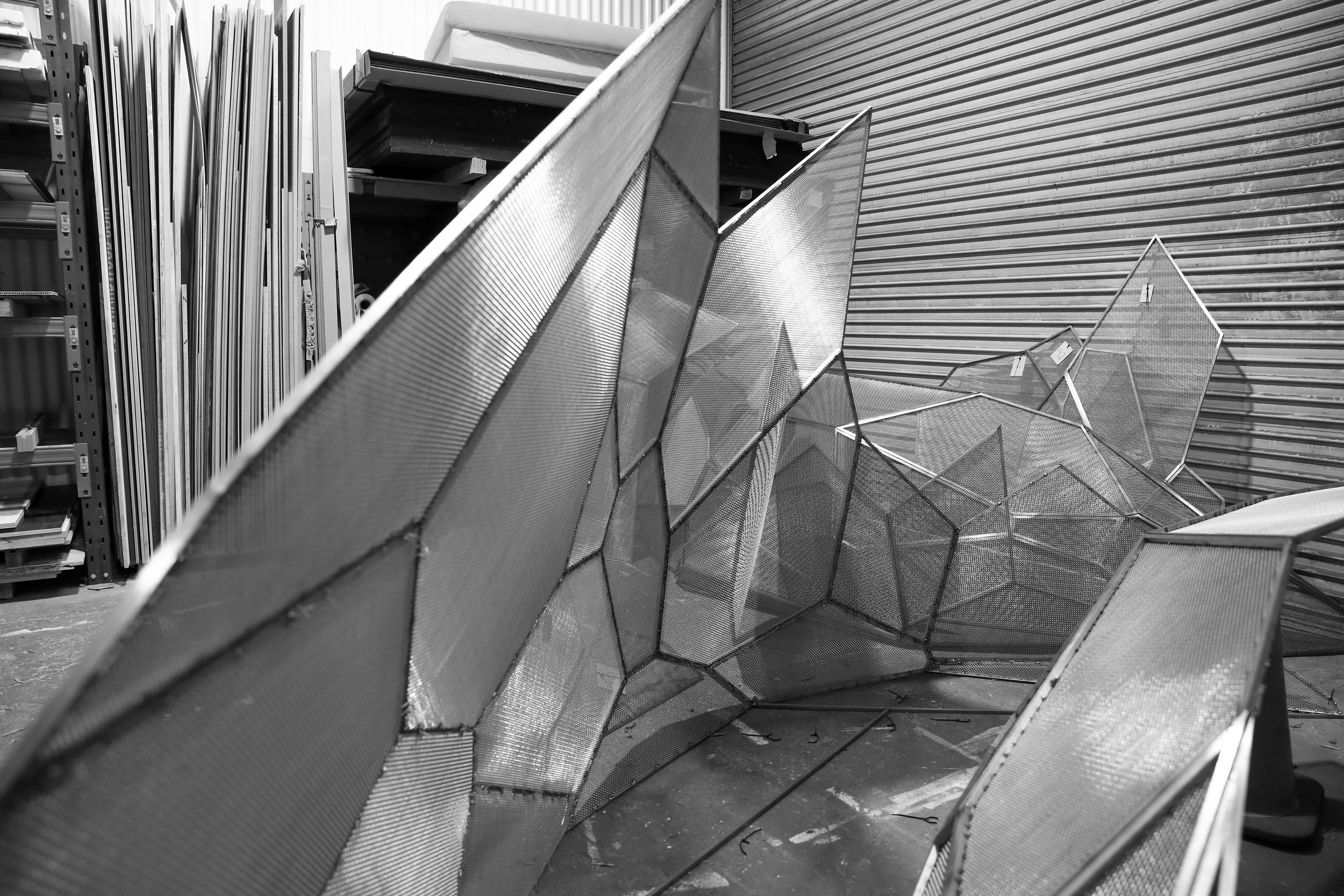
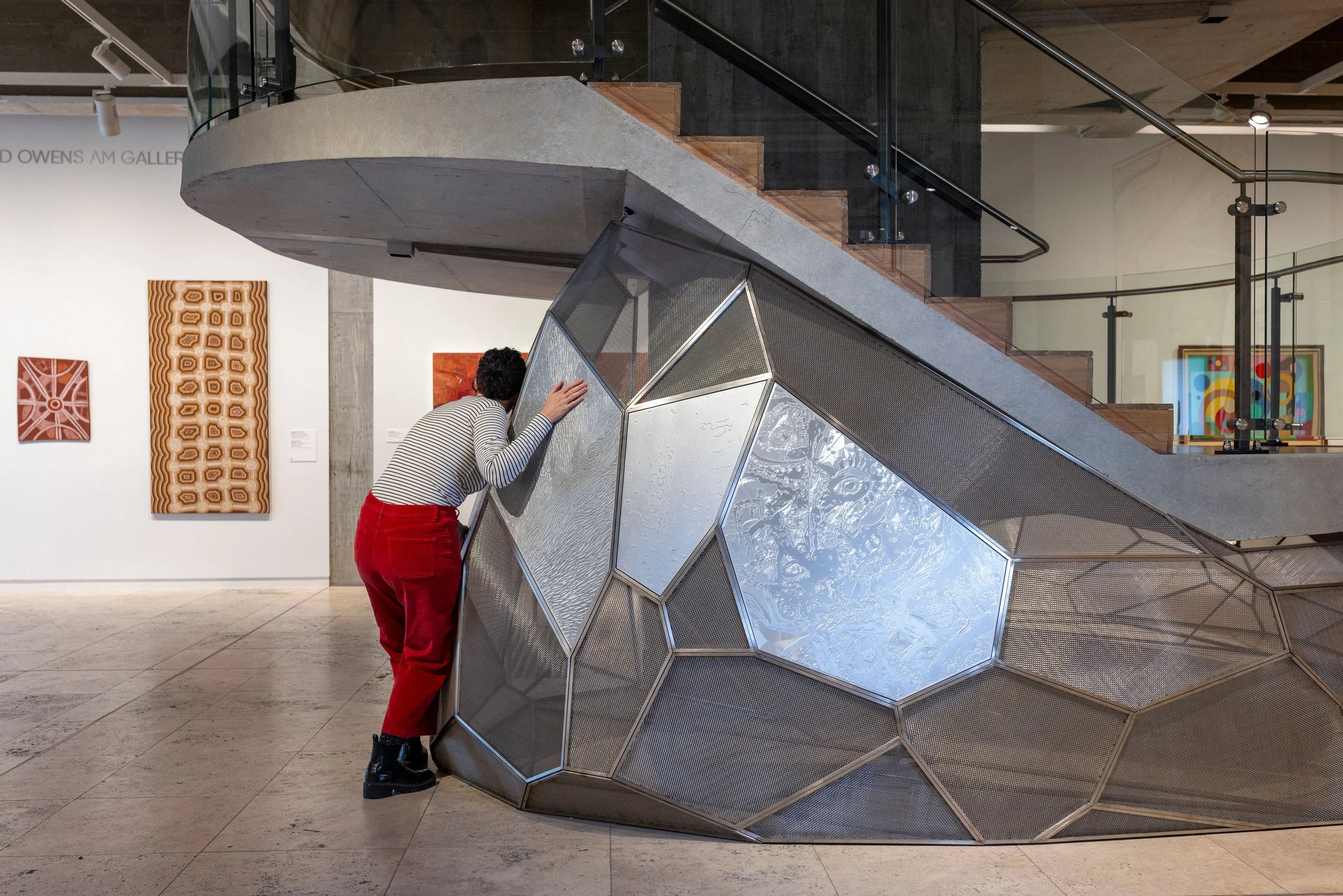
Two heritage staircases ascend from opposing sides of the gallery. Beneath each one, a tactile architectural sculpture by Fayen d’Evie swells from the cavity beneath the first landing. Through their faceted stainless-steel structures – crystalline in form, covered by a veil of steel mesh – they reveal partial views of the enclosed brutalist staircases.
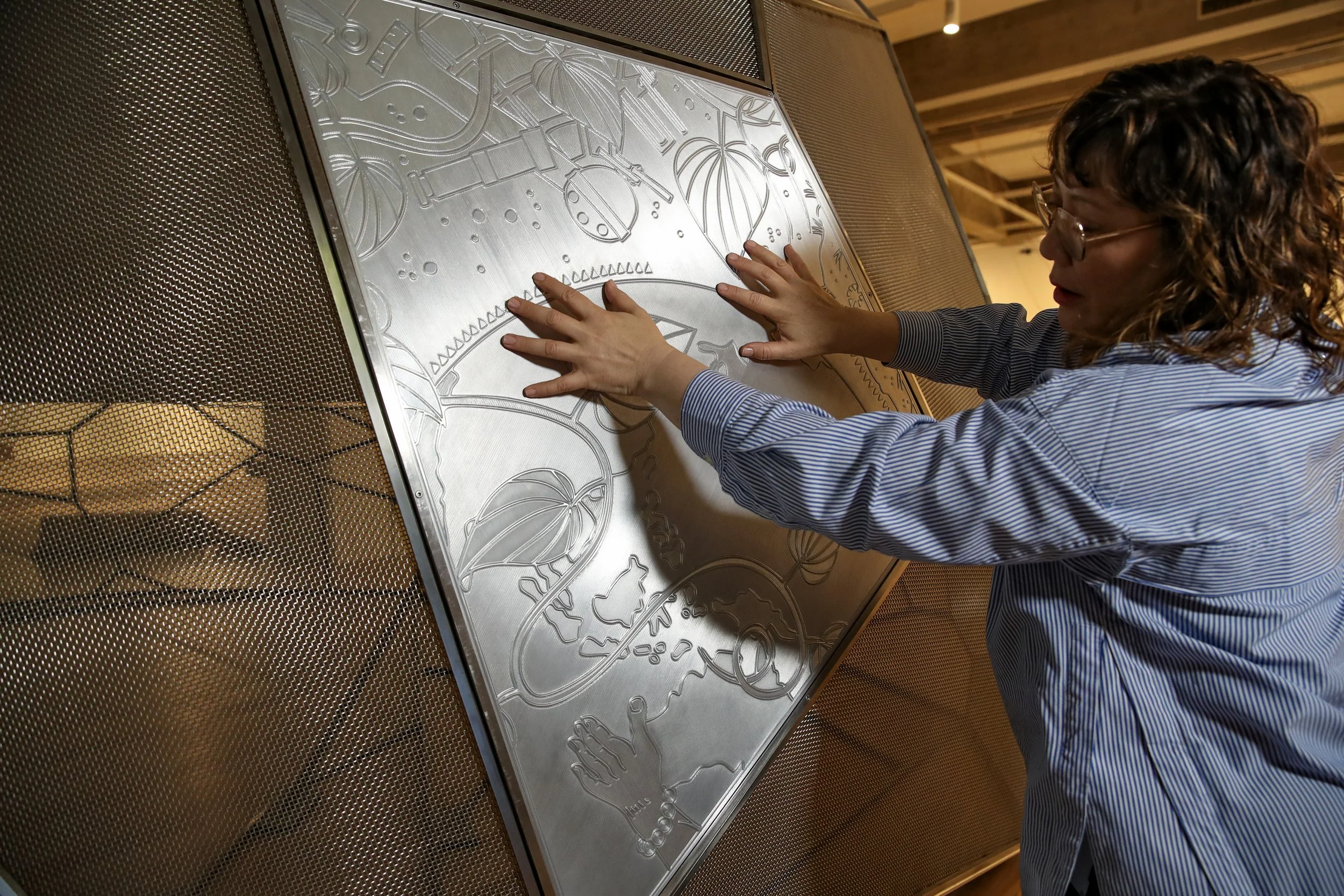
Some of these facets are inlaid with textured aluminium engravings that excerpt works from the Newcastle Art Gallery collection at 1:1 scale. Inlaid works invite touch in different ways. For example, fingertips might patter over a tactile translation of an excerpt of Summer Storm, a painting by Emily Kam Kngwarray. Raised ridges map colour shifts across the composition, while grittier textures gesture towards brushstrokes that daub the surface of the original. By contrast, the tactile translation of a painting by Gloria Petyarre invites a more full-bodied motion, reaching to trace engraved organic curves, like wind rustling a canopy of leaves. Across the sculptures’ angled steel surfaces, you can find translations of works by Fred Williams, John Olsen, Frank Hinder and Brian Robinson.
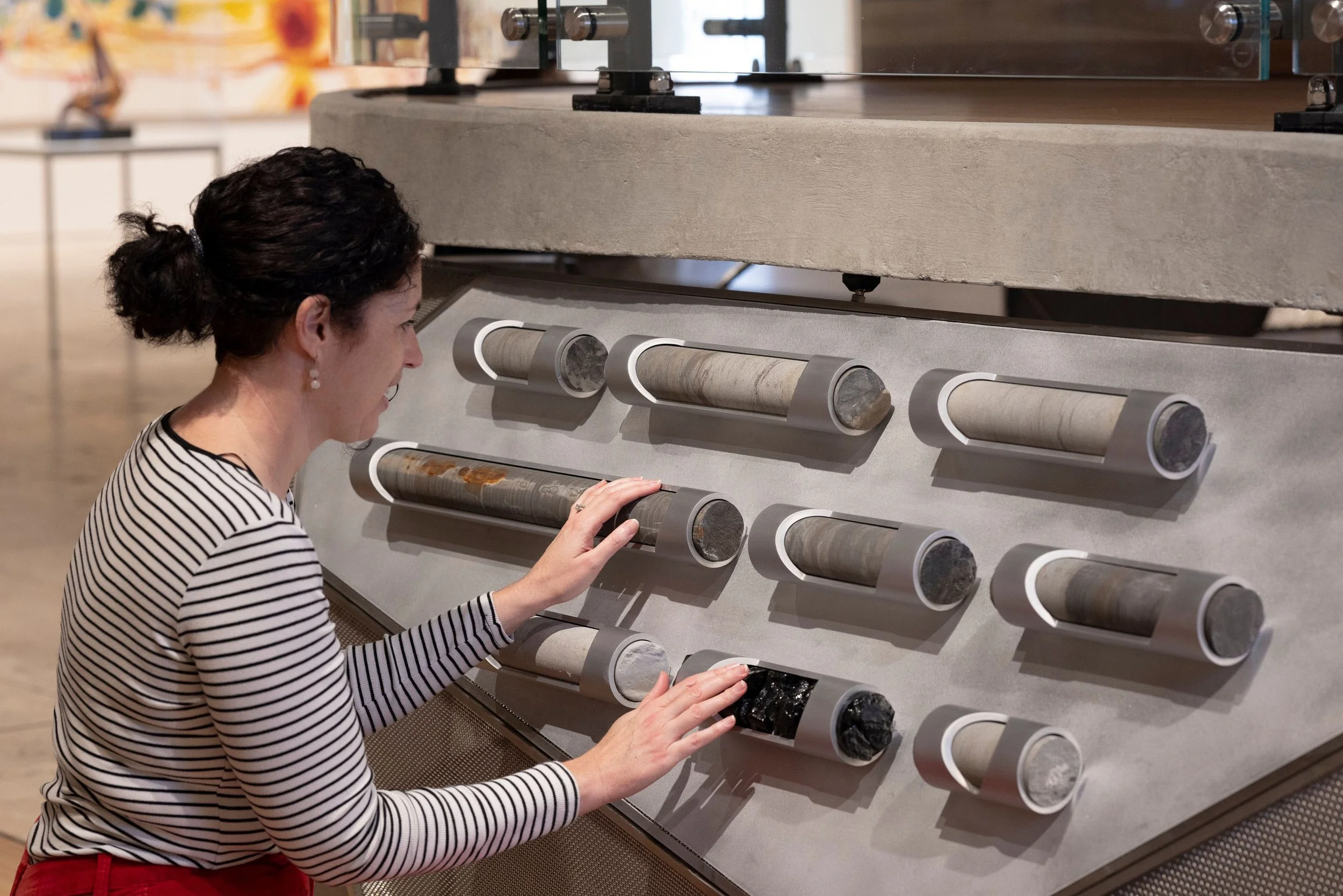
Each sculpture also includes an abstract text work. In one, bronze braille spells out a quote from art critic Denis Diderot about his friend, a young blind woman, Melanie de Salignac: “Touch enabled her to discern minute details… which often pass unnoticed.” In the other, geological cores from the building’s construction process are arranged like a redacted paragraph. These materials of country point to unseen sculptural forms beneath the gallery, and acknowledge the extractive processes and material histories of place.
As you move around each sculpture, light shimmers and scatters across and through its surfaces. These fleeting diffractions and reflections create patterns that shift and overlap, radiating like the patterned scales of some semi-transparent creature.
This image description was drafted by Access Lab and Library (Fayen d’Evie and Jon Tjhia) for Newcastle Art Gallery’s Nancy audioguide
-
Tactile architectural sculptures: steel, aluminium, geological cores.
-
Permanent commission
Featured in:
Iconic Loved Unexpected, Newcastle Art Gallery, Newcastle, 28 February - ongoing 2026 -
Black and white photos of process by Roni Bintang
Installation images by Edwina Richards